Explainer
Where Is Santa Claus From? The Real Saint Nicholas of Myra
Key takeaways
- Santa Claus comes from Saint Nicholas, a 4th-century bishop of Myra, today Demre in Antalya province, Turkey.
- His bones were taken to Bari, Italy, in 1087; his feast day is 6 December.
- In New York the Dutch Sinterklaas became Santa Claus: Irving in 1809, the eight reindeer in 1823, Rudolph in 1939.
- The chimney comes from his legend of gold given in secret at night, and from the 1823 poem.
Santa Claus comes from Saint Nicholas, a bishop who lived in the fourth century in Myra, a town on the Mediterranean coast of what is now Turkey. Myra is today’s Demre, in the province of Antalya, and the church built over his tomb still stands there. His bones were carried to Bari in Italy in 1087, his legend travelled across Europe as Sinterklaas, Père Noël and Father Christmas, and in 19th-century New York he became the Santa Claus with a sleigh and reindeer. Here is the whole journey, with the dates, the places you can still visit, and the old story behind gifts that come down the chimney.
Saint Nicholas at a glance
| Real name | Nicholas of Myra, Saint Nicholas |
|---|---|
| Born | Around 270, in Patara, on the Lycian coast (traditional date) |
| Known as | Bishop of Myra, famous for secret gifts to people in need |
| Died | 6 December 343, in Myra (traditional date) |
| Feast day | 6 December (19 December in churches that keep the Julian calendar) |
| Where he was buried | Myra, today Demre in Antalya province, Turkey |
| Where his bones are now | Mostly in the Basilica di San Nicola in Bari, Italy, since 1087; fragments in Venice |
| Became Santa Claus | Through the Dutch Sinterklaas, in New York, between 1809 and the 1860s |
Myra, the town of Saint Nicholas
Myra was a city of ancient Lycia, on a fertile plain on the southern coast of Anatolia. Today it lies inside the town of Demre, in Antalya province. What made Myra famous in the ancient world is still there to see: two cemeteries of Lycian rock-cut tombs, carved into the cliff faces like the fronts of little temples, a large Roman theatre at the foot of the cliff, and Andriake, the city’s old harbour, where the granary built under the emperor Hadrian now houses the Museum of Lycian Civilizations.
Nicholas was born a short way along the coast, in the port of Patara, and became bishop of Myra. The stories told about him for the next 1,700 years are almost all about gifts: food for a hungry city, help for sailors in a storm, and, most famously, gold for three sisters who could not marry without a dowry.
The Church of St Nicholas in Demre was built in the sixth century over the place where he was buried, and rebuilt and repaired many times since. In 1862 Tsar Nicholas I of Russia paid for a restoration that added a bell tower. Today the church is a museum and is on UNESCO’s tentative list for World Heritage. Inside, archaeologists found a broken sarcophagus that is thought to be his original tomb.
Why his bones are in Bari
In 1087, sailors from the Italian port of Bari came to Myra and took the main bones of Saint Nicholas from his church without permission. The relics reached Bari on 9 May 1087, and the city built the Basilica di San Nicola for them. Most of his bones are still there. Sailors from Venice took the remaining fragments from Myra in 1100, during the First Crusade, and those are kept in the church of San Nicolò al Lido. So Saint Nicholas lived in Turkey, but his tomb is visited in Italy, and every 6 December pilgrims gather in Bari for his feast.
How Saint Nicholas became Santa Claus
For centuries Saint Nicholas was the saint who brought gifts to children in many European countries on his feast day, 6 December. In the Netherlands he became Sinterklaas, and Dutch settlers took him across the Atlantic to New Amsterdam, the town that became New York.
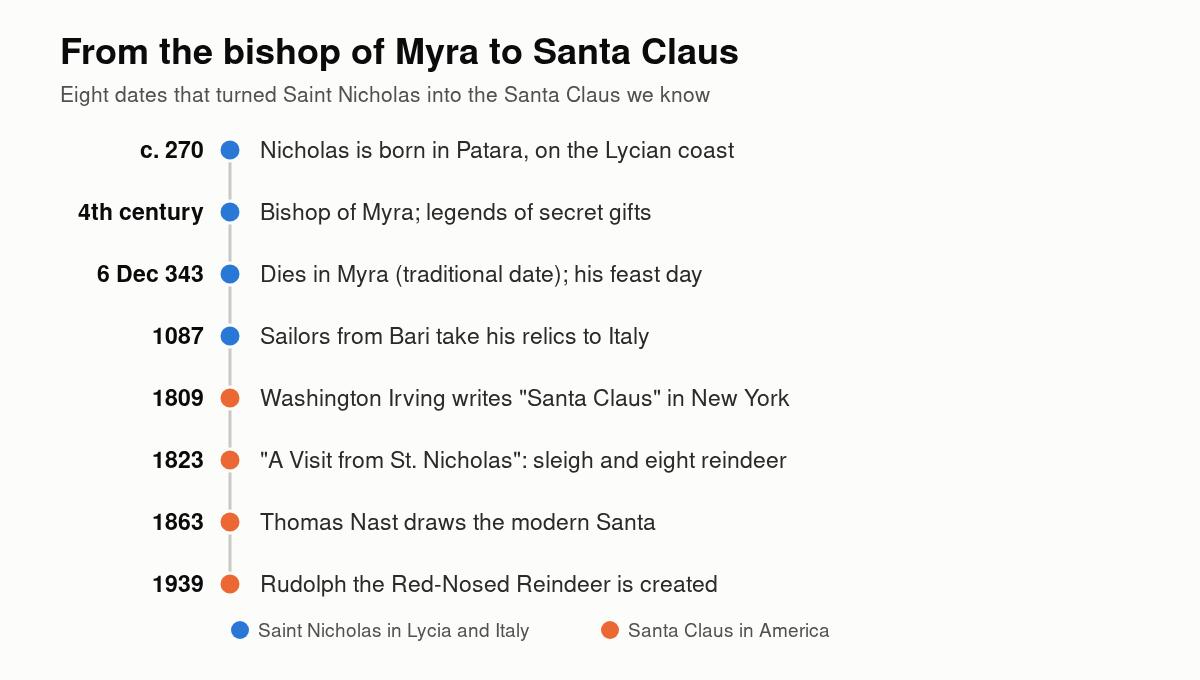
- 1809: Washington Irving’s History of New York turns Sinterklaas into “Santa Claus”, no longer a bishop but a jolly Dutchman with a pipe.
- 1821: an anonymous New York poem, “Old Santeclaus with Much Delight”, puts him on a sleigh pulled by a reindeer.
- 1823: “A Visit from St. Nicholas”, better known as “‘Twas the Night Before Christmas”, gives him a miniature sleigh and eight tiny reindeer: Dasher, Dancer, Prancer, Vixen, Comet, Cupid, Dunder and Blixem, later renamed Donner and Blitzen.
- 1863 to 1866: the cartoonist Thomas Nast draws Santa for Harper’s Weekly and gives him a home at the North Pole.
- 1939: Robert L. May, a copywriter at the store chain Montgomery Ward, creates Rudolph the Red-Nosed Reindeer, the ninth reindeer, who leads the sleigh. Gene Autry’s 1949 song makes him famous.
Why does Santa come down the chimney?
The best-known story about Nicholas is about three sisters. Their father was too poor to give them a dowry, so they could not marry. Nicholas came at night, unseen, and threw a purse of gold coins through the window of their house, once for each daughter, three nights in a row. In later retellings the gold drops down the chimney and lands in the stockings hung by the fire to dry, which is the story most often told as the origin of Christmas stockings.
The secret visit at night stayed in every version of the legend, and the 1823 poem made the chimney part of Santa for good: “Down the chimney St. Nicholas came with a bound.” That is why, in our game, the gifts go down the chimneys too.
What Santa is called around the world
| Language or country | Name | Means |
|---|---|---|
| English (US) | Santa Claus | From the Dutch Sinterklaas, Saint Nicholas |
| English (UK) | Father Christmas | A figure known since 16th-century England |
| French (France, Canada) | Père Noël | Father Christmas |
| Italian | Babbo Natale | Daddy Christmas |
| Portuguese (Brazil) | Papai Noel | Daddy Christmas |
| Spanish | Papá Noel | Daddy Christmas |
| German | Weihnachtsmann | The Christmas man |
| Dutch | Sinterklaas | Saint Nicholas, who comes on 5 and 6 December |
| Finnish | Joulupukki | The Yule goat |
| Russian | Ded Moroz | Grandfather Frost |
| Turkish | Noel Baba | Father Christmas |
| Vietnamese | Ông già Noel | Old man Christmas |
Visiting Myra today
Demre is on the coast road of Antalya province, between Kaş and Finike. Three stops tell the whole story: the Church of St Nicholas in the town centre, now a museum; the ruins of ancient Myra at the edge of town, with the rock-cut tombs above the Roman theatre; and the old harbour of Andriake on the sea, with the Museum of Lycian Civilizations in Hadrian’s granary. Patara, where Nicholas was born, lies further west along the same coast.
Fly over Myra in Santa’s Flying Gift Quest
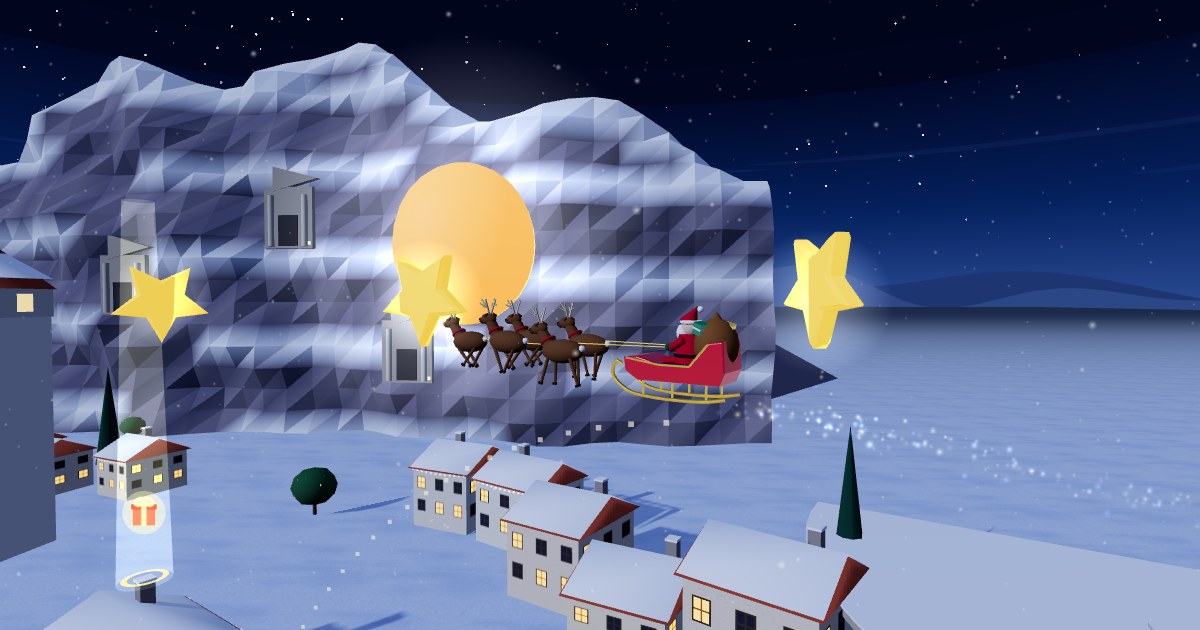
We built Santa’s Flying Gift Quest, a free 3D Christmas game, and its first night takes place in Myra. You fly Santa’s sleigh, four reindeer and Rudolph over a snowy Myra on Christmas Eve: along the harbour and its lighthouse, through the old town, past the Church of St Nicholas and the theatre, and along the cliff with the Lycian tombs. Fifteen chimneys glow for a gift, and you have twenty gifts to drop.
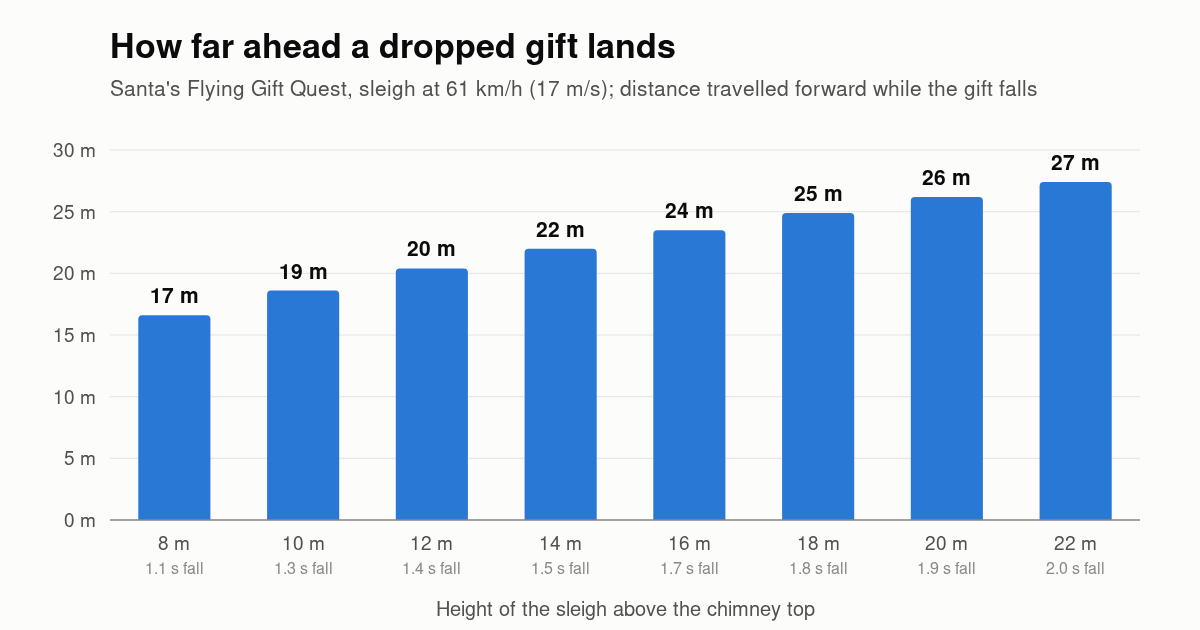
The one thing that makes the difference is timing. The sleigh flies at 61 km/h, on average 16.9 meters above the chimney tops of the houses that wait for a gift. From that height a gift falls for about 1.7 seconds and travels about 24 meters forward before it reaches the chimney. In practice:
- Drop about 1.4 seconds before you are over the chimney. The ring on the ground shows where the gift will land; when it turns green over a chimney, let go.
- Fly lower before a chimney. At 8 meters above it the gift lands 17 meters ahead after 1.1 seconds; at 22 meters it lands 27 meters ahead after 2 seconds, with more time to drift.
- Aim close, not perfect. A chimney that is waiting pulls in a gift that passes within about 2.6 meters above it.
- Keep the spare gifts. Each one left in the sack is worth 100 points at the end of the night, and a bump into a tower or a tree costs one.
A gift for all fifteen houses earns two stars; all fifteen without a single bump earns the third. In our test flights a careful line through the night delivered every gift down a chimney, with five gifts to spare.
Frequently asked questions
Where is Santa Claus from?
Santa Claus comes from Saint Nicholas, who was bishop of Myra in the fourth century. Myra is today’s Demre, in Antalya province on the Mediterranean coast of Turkey. He was born in nearby Patara.
Was Saint Nicholas a real person?
Yes. Nicholas was a real bishop of Myra in the fourth century. By tradition he was born around 270 and died on 6 December 343. Many of the stories about him are legends, but the church built over his tomb still stands in Demre.
Where is Saint Nicholas buried?
He was buried in Myra. In 1087 sailors from Bari took most of his bones to Italy, where they are kept in the Basilica di San Nicola. Fragments are in Venice, and his original tomb can be seen in the Church of St Nicholas in Demre.
Why does Santa come down the chimney?
In the legend, Nicholas gave gold in secret at night to three sisters who had no dowry, throwing it into their house; later retellings have it fall down the chimney into stockings drying by the fire. The 1823 poem “A Visit from St. Nicholas” made the chimney part of Santa for good.
When is Saint Nicholas Day?
6 December, the traditional date of his death. Churches that keep the Julian calendar celebrate on 19 December, and in the Netherlands Sinterklaas brings gifts on the evening of 5 December.
What is Santa Claus called in other countries?
Père Noël in French, Babbo Natale in Italian, Papai Noel in Brazilian Portuguese, Papá Noel in Spanish, Weihnachtsmann in German, Father Christmas in British English, Noel Baba in Turkish and Ông già Noel in Vietnamese.